
The Water Cycle in Job
Scripture: Job 36:27–29; Job 26:8; Job 37:11, 16; Job 38:22–29, 34–37; Ecclesiastes 1:7; Amos 9:6
The claim
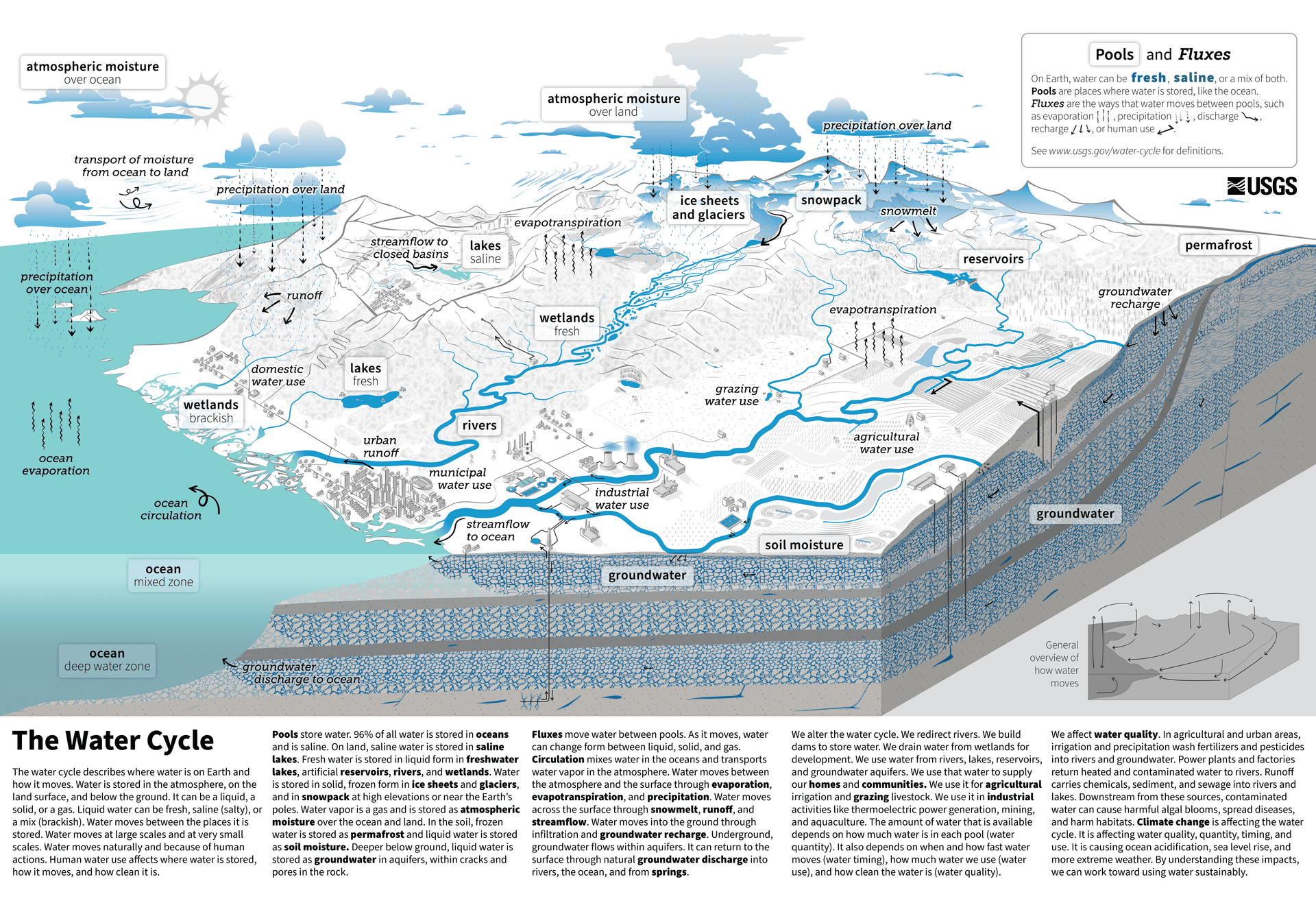
Job describes water being drawn up, held in clouds and returned to the earth as rain, snow, hail and dew: a picture of the water cycle.
What the text and science say
Job has more on the water cycle than any other book. God "draws up the drops of water" that "distill as rain" (36:27–28); binds the waters in clouds that "do not burst" (26:8); loads the clouds with moisture and balances them (37:11, 16); gives the wind its weight and decrees the rain (28:25–26); and keeps storehouses of snow and hail, fathering rain, dew, ice and frost (38:22–29). Ecclesiastes 1:7 and Amos 9:6 add rivers running to the sea and the sea's waters poured back on the land. Together these match evaporation, condensation, cloud formation and precipitation. Greek thinkers also described the cycle: Xenophanes (6th century BCE) called the sea the source of clouds, winds and rivers, and Aristotle explained evaporation and rain in the 4th century BCE.
Sources
- David J. A. Clines, Job 21–37 (Word Biblical Commentary 18A), Thomas Nelson (2006)
- David J. A. Clines, Job 38–42 (Word Biblical Commentary 18B), Thomas Nelson (2011)
- G. S. Kirk, J. E. Raven and M. Schofield, The Presocratic Philosophers (2nd ed.), Cambridge University Press (1983)
Verdict history
- SupportedInitial verdict.